v1.0.109
January 12, 2026
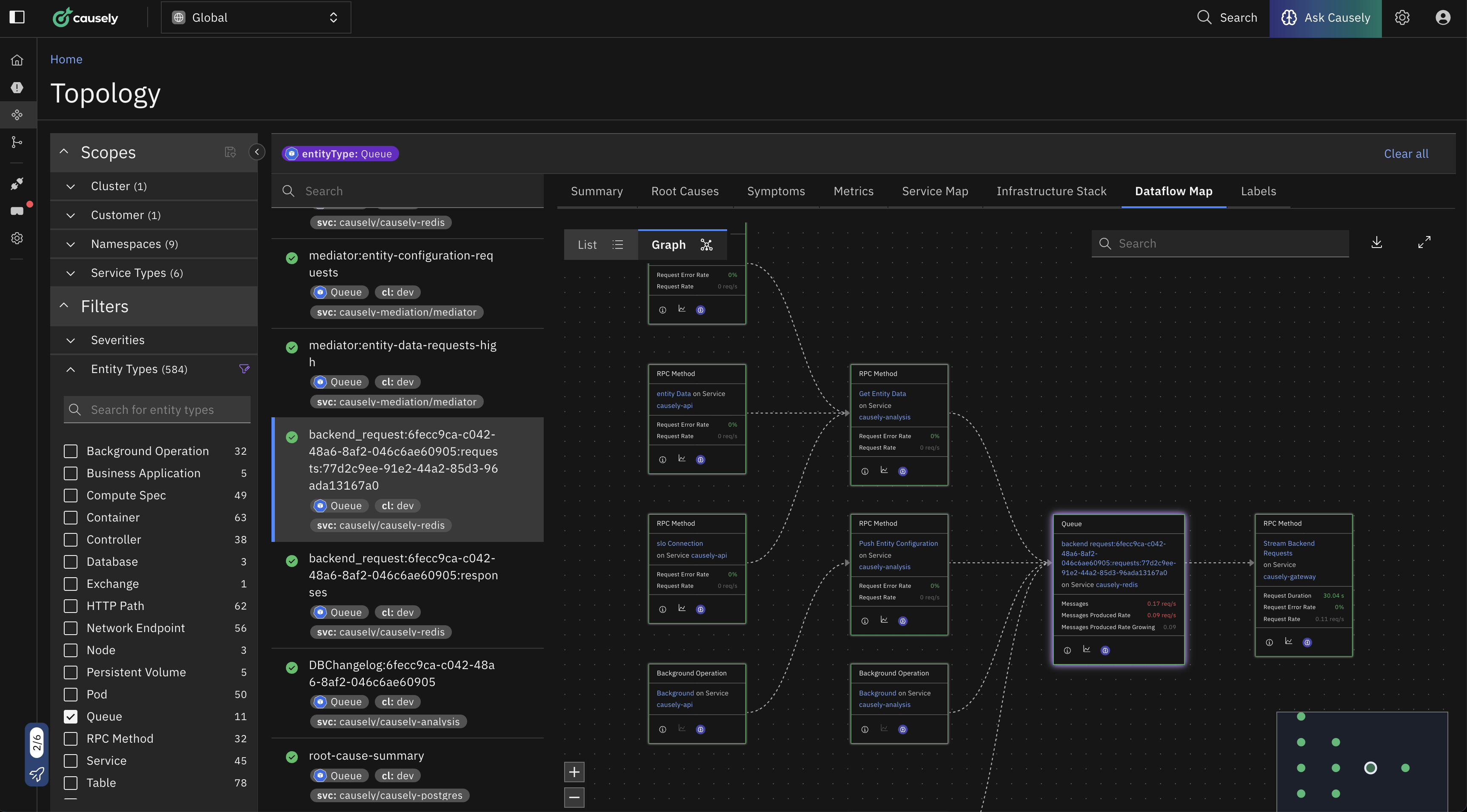
Version v1.0.109Expanded Causal Model for Asynchronous Communications
Causely's causal model has been expanded to better represent asynchronous messaging systems by adding support for queue size growth and dead-letter queue symptoms. For the underlying failure mode and why it gets misdiagnosed, see Queue Growth, Dead-Letter Queues, and Why Asynchronous Failures Are Easy to Misread
This allows Causely to more precisely diagnose reliability failures where message brokers accept traffic, but downstream consumers are unable to process messages reliably or quickly enough, leading to sustained backlogs, processing failures, and degraded system behavior. Teams can now pinpoint where asynchronous workflows are breaking down, instead of inferring issues indirectly from latency or error spikes elsewhere in the system, enabling faster and more confident remediation.
Managed Notifications
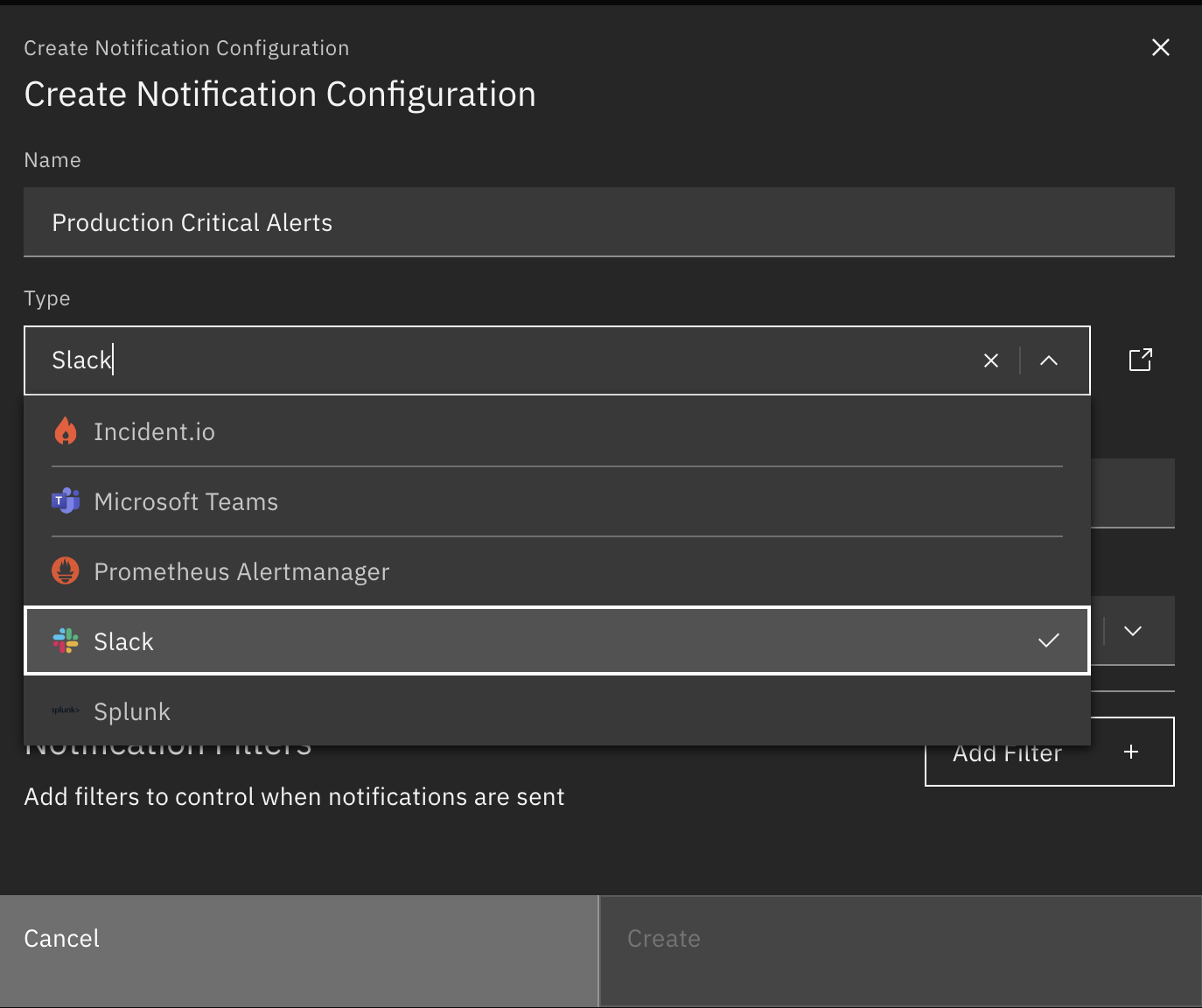
You can now set up and manage alerting workflows directly from the Causely UI. This removes the need for manual configuration and makes it significantly easier to control how root causes inferred by Causely are routed to your teams.
Notifications can be sent to Slack, Microsoft Teams, Alertmanager, incident.io, and Splunk On-Call, with flexible filtering that lets you distinguish urgent versus non-urgent issues, by root cause type (for example, application versus infrastructure root causes), and where an issue originates (for example, by cluster or namespace).
By embedding Causely root cause notifications into on-call workflows, teams gain tighter control over alert noise and escalation paths, ensuring that high-impact root causes reach the right responders with the right context, while lower-priority signals no longer interrupt on-call unnecessarily.
UI Support for Threshold Configuration
Causely now supports configuring latency and error rate thresholds directly in the UI for individual services. This allows you to override learned thresholds when you have explicit knowledge of expected service behavior or contractual service levels.
By aligning thresholds with how a service is actually operated and measured, the symptoms feeding Causely's causal model more accurately reflect reliability expectations. Better-aligned thresholds improve the relevance and credibility of detected symptoms and downstream root causes, reducing false positives while preserving sensitivity where it matters most.
Minor Improvements
- Improved performance and reliability when creating snapshots used to calculate reliability deltas
- Enhanced CockroachDB support by mapping database metrics to the underlying EC2 instances
- Added richer attribute details for select integrations (for example, OpenTelemetry) to improve understanding of the status of the integration