v1.0.114
February 5, 2026
Version v1.0.114Alert Mapping and Root Cause Context
We've enhanced support for ingesting alerts from Alertmanager, Prometheus, Mimir, incident.io, and Datadog to make it easier to understand the actual root cause behind alert noise.
Ingested alerts are now explicitly mapped to symptoms and shown in the context of the inferred root cause. This reduces the toil of chasing individual alerts and helps teams focus on resolving the underlying issue instead of investigating symptoms in isolation.
You can also view alerts over time and see which symptoms and root causes they mapped to, making it easier to understand alert behavior patterns and their real impact.
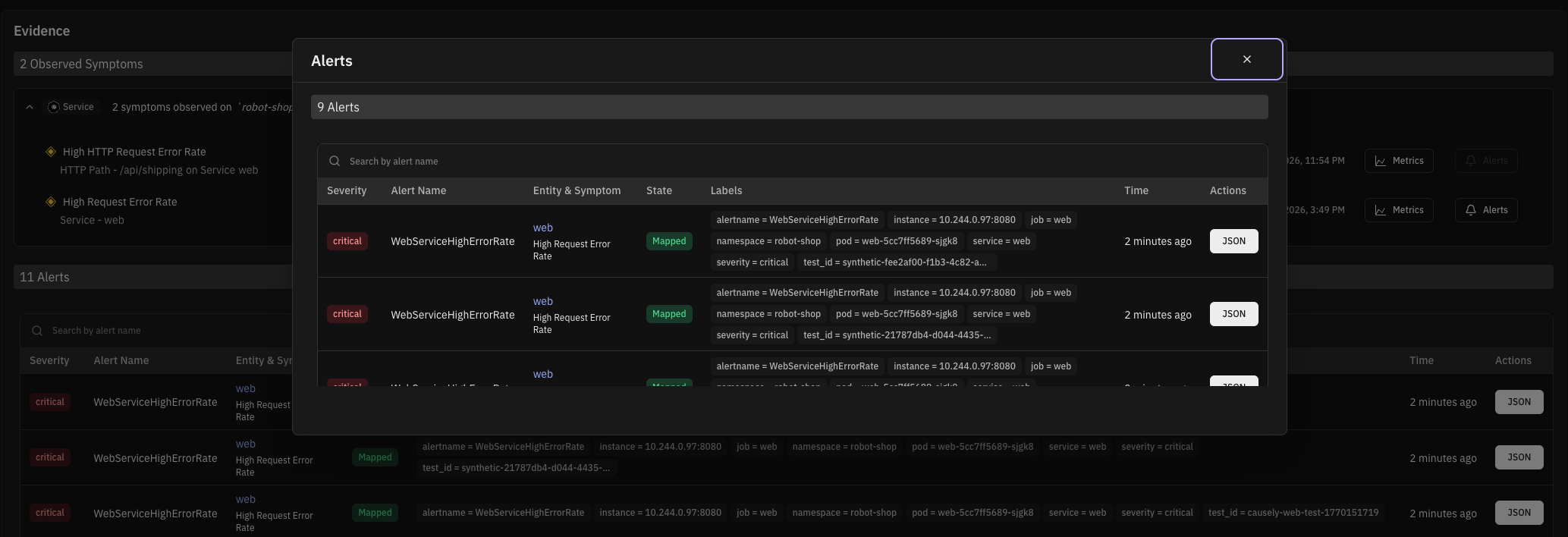
Alerts are mapped to symptoms and shown in the context of the inferred root cause, so you can see which underlying issue each alert points to.
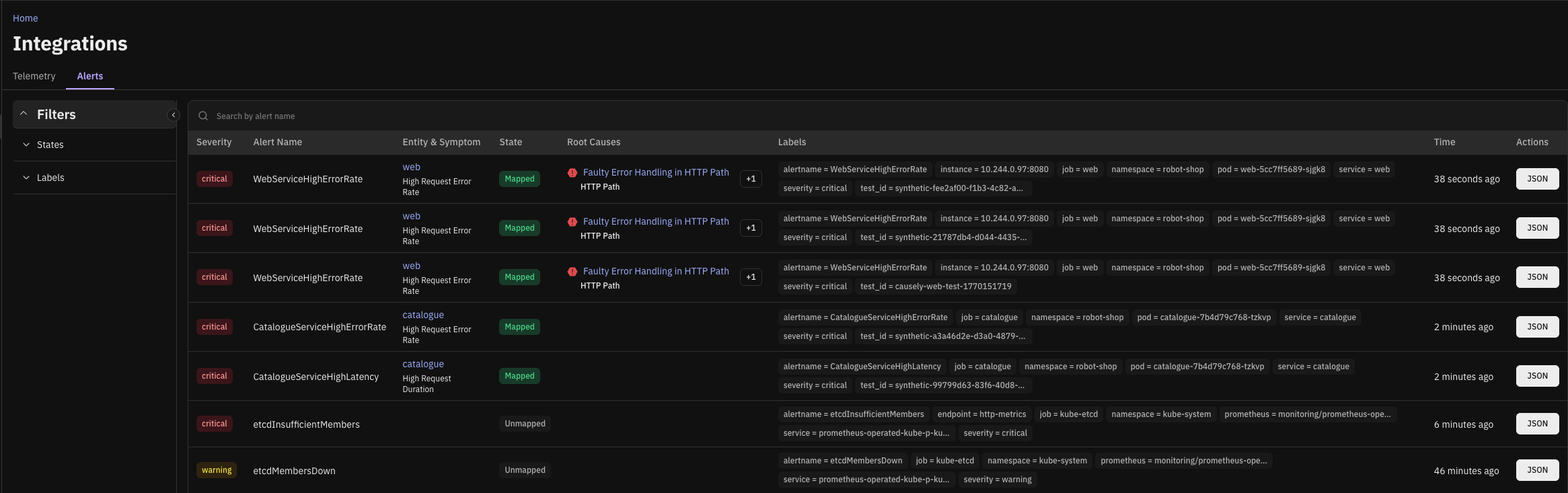
A more complete view of which alerts mapped and which did not gives you confidence that Causely understands what's important to you (or not).
Google Cloud Pub/Sub
We’ve expanded support for asynchronous dataflows to include Google Cloud Pub/Sub.
Cloud Pub/Sub is now modeled as a first-class asynchronous service type, allowing teams to understand how message-driven workflows contribute to incidents and root causes without stitching together dashboards or relying on black-box summaries.
Minor Updates
- Credential auto-discovery for PostgreSQL
- Improved AWS SQS queue discovery
- Ensured queues and exchanges are visible within a defined scope
- Improved how dataflow graphs are rendered for queues
- Added support for GCP authentication using Workload Identity Federation for GKE