v1.0.127
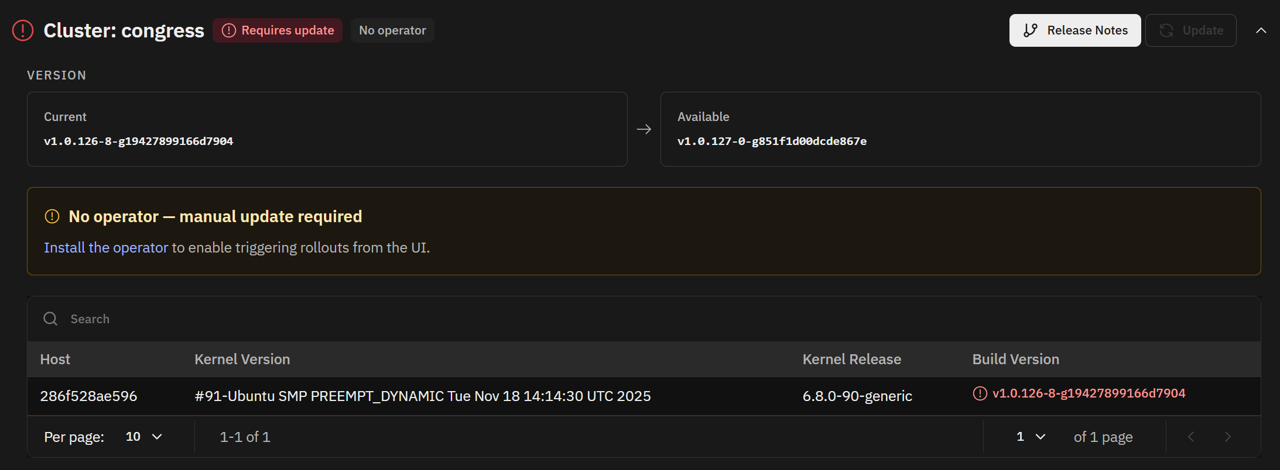
Redesigned Mediators Page
The Mediators page has been redesigned with two additions that give teams more visibility and control over their mediator deployments.
Release notes link: When a new mediator version is available, a Release Notes link now appears directly on the page. Previously, the version update notification provided no context about what changed, requiring users to look up release notes separately. The link surfaces that context in place, so teams can assess whether an update is urgent without leaving the product.
Operator status: The page now surfaces whether the Causely Operator is installed for each cluster. When no operator is detected, a notice indicates that manual update is required and links to operator installation instructions. When the operator is installed, version updates can be triggered directly from the UI without a manual Helm upgrade. Learn more about the Causely Operator
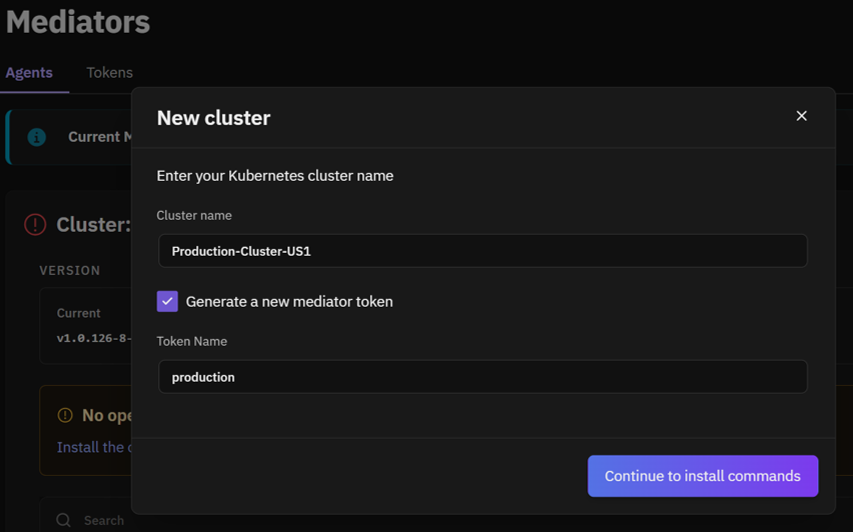
Streamlined Mediator Setup
Adding a new mediator now walks you through cluster naming and token generation in a single, consolidated flow. The installation command is available to copy directly from the setup screen, removing the need to navigate between steps to gather the information needed to complete an installation. The mediator token is displayed once during setup, at the point where it is needed.
Minor Improvements
- RabbitMQ MassTransit traces: Causely now parses RabbitMQ MassTransit trace data, extending trace coverage for environments that use MassTransit as a messaging framework over RabbitMQ.
- Topology search: Fixed a bug where the filter search bar disappeared after returning results in the topology view. The search bar now persists after a search, and results can be cleared to return to the default state.
- Log volume limits for root causes: Log collection per root cause is now capped at 500 lines per service and 2,000 lines per defect. This prevents evidence sets from growing to 10,000+ lines and keeps root cause data focused and fast to load.
- Docker service instance cleanup: For Docker installations, stale service instance ID labels left behind after a process ID change are now removed automatically. This prevents topology noise from accumulating in Docker-based environments.